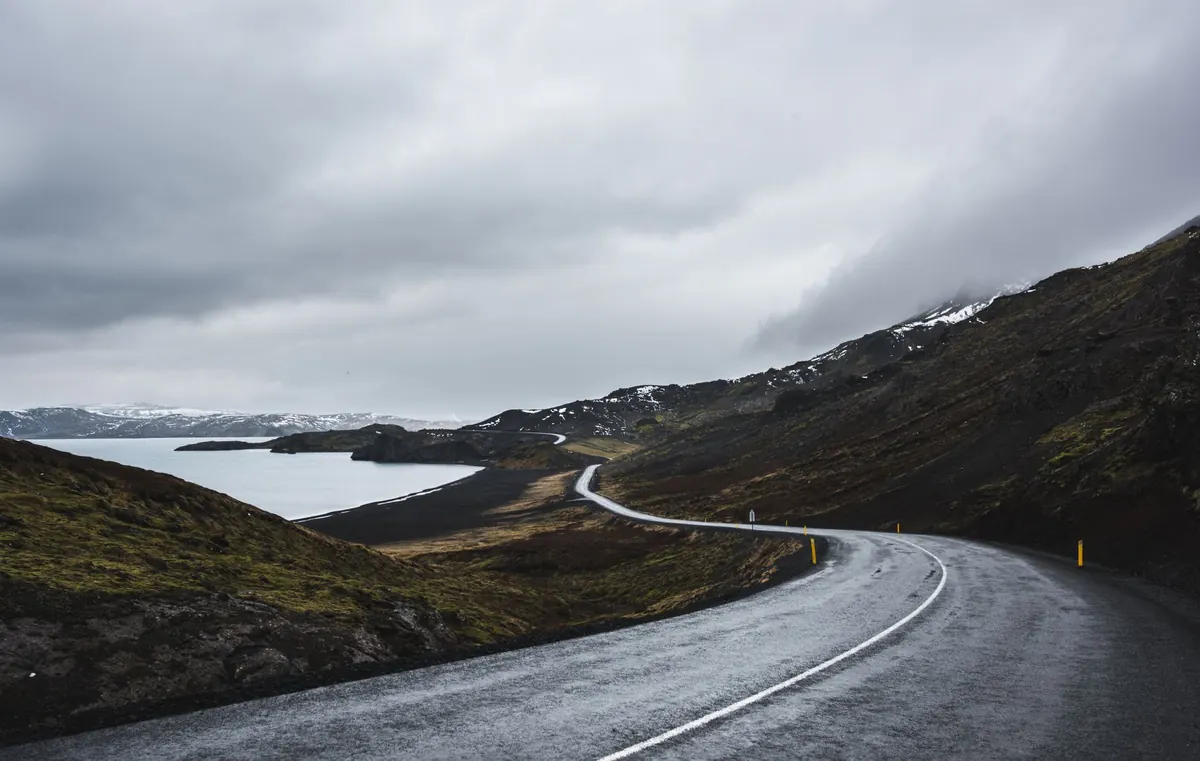
Iceland's Ring Road is roughly 1,330 kilometres of tarmac looping around the island, past waterfalls, black sand beaches, glacier lagoons and fishing villages. Seven days is tight but perfectly doable: most days mean three to four hours behind the wheel, with one long push at the end. Make it affordable by booking early, sleeping in a campervan or hostel dorm, cooking your own food, and skipping most of the paid extras. What follows is a realistic, tested shape for the week — not a checklist to sprint through, but a rhythm that gets you around the island without wrecking either your car or your bank balance.
The single most important decision is this: you are planning a road trip, not a sightseeing tour. The Ring Road rewards people who accept that the drive is the attraction. If you spend every day chasing every named stop, you'll finish each evening exhausted, eating petrol-station hot dogs because you ran out of time to cook.
The Route in Short
Go anticlockwise. You start with the Golden Circle and the south coast waterfalls — the sights most people came for — while your energy is highest, then work through the East Fjords and the north before finishing with a long, simple drive back to Reykjavík. Total driving with detours lands around 1,400 kilometres.
Anticlockwise also keeps you with the majority of traffic, which sounds like a downside but isn't: the busiest stretches have the most services, the most campsites and the safest passing places. The north and east are quieter either way.
Everything here stays on paved roads. You do not need a four-wheel drive for Route 1 in summer, and you should not attempt an F-road in a small car; many are closed to ordinary vehicles entirely. A modest economy car with good tyres will handle this itinerary comfortably between June and early September.
What a Week Actually Costs
Iceland is expensive, and July and August are the sharpest months. Rather than quote figures that shift every season, price your own dates on two or three rental sites before you commit. The main lines in your budget are:
- Vehicle hire — usually the single biggest cost. A small economy car is cheapest; a campervan costs more per day but replaces accommodation.
- Fuel — you'll burn roughly three to four tanks over the loop. Icelandic pump prices are high, so a fuel-efficient car genuinely matters.
- Sleeping — campsites charge per person per night and often a little extra for showers. Hostel dorms cost several times a campsite pitch.
- Food — supermarket cooking (Bónus and Krónan are the budget chains) versus one restaurant meal a day is the difference between a reasonable trip and a painful one.
- Extras — parking fees at some major sites, tunnel tolls, lagoon entries, whale watching. These add up fast.
As a rough sense of proportion: a campervan that doubles as your bed can be cheaper than a car plus seven nights of hostels, especially for two people sharing. For a solo traveller, the maths flips — a dorm bed and a tiny car often wins. Do the comparison for your group size before you book anything.
The people who overspend in Iceland almost never overspend on the car. They overspend on dinners, on cafés, and on the fourth paid lagoon in five days.
Booking Timeline
- Six to nine months out: book flights and lock your dates. Summer fares only go one way.
- Four to six months out: reserve the car or campervan. Summer stock sells out, and small automatics disappear first.
- Two to three months out: book hostel beds for the nights you want a real bed. Akureyri and Höfn are the tightest. Most campsites don't take reservations, so you're fine there.
- Two to four weeks out: check campsite opening dates, sort insurance, download offline maps.
- The day before each drive: check road.is and vedur.is for road closures and wind warnings.
The Itinerary, Day by Day
Day 1: Reykjavík, the Golden Circle, then south (about 200 km)
Collect the car early — Keflavík or central Reykjavík, whichever is cheaper — and stop at a supermarket on the way out. Þingvellir, Geysir and Gullfoss make a natural loop, with a parking fee at Þingvellir. Sleep at Selfoss or Hella, both of which have campsites and cheap guesthouse rooms.
If you land late, don't force the Golden Circle on day one. Spend the night in Reykjavík and start fresh; the itinerary has slack built in for exactly this.
Day 2: Waterfalls and black sand (about 230 km)
Seljalandsfoss lets you walk behind the water — bring a waterproof shell, not an umbrella, which the wind will destroy. Skógafoss is a short stop unless you climb the staircase for the view upstream. Then the black sand at Reynisfjara, where the sneaker waves are genuinely lethal: never turn your back on the sea, and stay well back from the waterline. Camp near Vík, or push an hour further east to save time tomorrow. This is your first night of proper Icelandic wind if you're camping — pitch with the car as a windbreak.
Day 3: Glacier country to the East Fjords (about 270 km)
The south-east is the highlight stretch. Fjaðrárgljúfur canyon, then the vast outwash plain of Skeiðarársandur, then Jökulsárlón glacier lagoon and the small icebergs washing up on Diamond Beach across the road. Both are free to visit; the parking fee is small. If you want a boat ride among the icebergs, book it in advance — it's the one extra worth considering.
From there, Höfn for langoustine if you're treating yourself, then the East Fjords: narrow, winding, quiet and beautiful. Sleep at Djúpivogur or Breiðdalsvík. Drive this stretch slowly; there are few petrol stations and fewer places to stop.
Day 4: East Fjords to Mývatn (about 300 km)
A long but easy driving day on the high plateau after Egilsstaðir. Break the drive at Dettifoss if you've got energy left — it's Europe's most powerful waterfall, and the walk from the west car park is short but rocky. Then Mývatn, where the campsite is excellent and the midges are relentless. Buy a head net before you need one.
Day 5: Mývatn, Húsavík and Akureyri (about 180 km)
Mývatn's sights cluster tightly: the geothermal vents at Hverir, the lava labyrinth at Dimmuborgir, and the nature baths, which cost a fraction of the Blue Lagoon and are arguably nicer. Continue via the Goðafoss waterfall to Akureyri, Iceland's second city, where you can restock properly, do laundry and sleep in a real bed.
Day 6: Akureyri to Snæfellsnes or the west (about 300 km)
Head west through Skagafjörður, one of Iceland's prettiest farming valleys, and stop at the turf church at Víðimýri or the seal colony at Vatnsnes if time allows. If you're moving fast, camp near Borgarnes; if you have the energy, push on to the Snæfellsnes peninsula, which packs glaciers, cliffs and fishing villages into one day.
Day 7: Back to Reykjavík (about 200 km)
The final drive is straightforward — motorway most of the way — so leave time for one last stop, whether that's the settlement at Reykholt, the hot springs at Deildartunguhver, or simply a long lunch in Borgarnes. Return the car with a full tank, refuel before the airport to avoid premium rates, and keep half a day's buffer before your flight.
Small Savings That Add Up
- Fuel at the right stations: the discount chains outside towns are noticeably cheaper than motorway pumps. Fill up whenever you pass one in the east — the gaps are long.
- Shower smarter: many campsites charge for hot water by coin or card. A shared swimming pool entry, a distinctly Icelandic habit, often costs less than a pay-shower and gets you a hot tub.
- Eat your big meal at lunch: the same restaurant is cheaper at midday, and lunch portions leave you free to cook a simple pasta back at camp.
- Skip the Blue Lagoon on arrival: it's the priciest and most crowded option. Mývatn, Hreiðar or the local town pools cost far less.
- Bring a water bottle: Icelandic tap water is excellent, and buying bottled water is the most common quiet waste of money on the island.
Common Mistakes on a Seven-Day Loop
Overscheduling day one. Jet lag plus a right-hand drive in unfamiliar weather is a bad combination. Land, shop, sleep.
Ignoring the wind. Icelandic gusts regularly damage car doors and campervan roofs. Check vedur.is every morning and hold your door when you open it.
Treating timings as fixed. A two-hour drive can become three in fog or rain. Build at least an hour of slack into every day, and never book a non-refundable activity for the same evening as a long drive.
Assuming everything is open. Some campsites, petrol stations and museums close in shoulder season. Confirm opening dates as you go, not as you booked.
Seven days on the Ring Road is not a leisurely holiday, and it shouldn't pretend to be. Done with early starts, supermarket food and a willingness to keep moving, it's one of the best-value big trips in Europe — and you'll still come home with more photographs than you know what to do with.
Photo: Kamil Gr / Pexels